

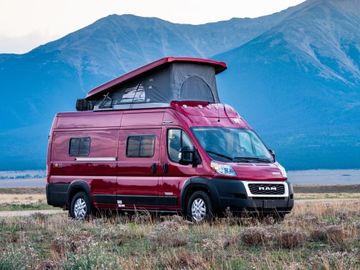
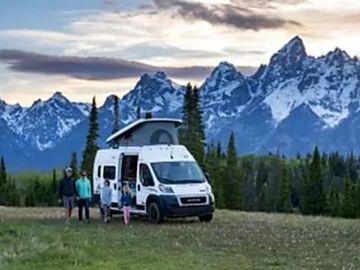
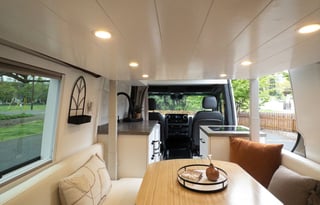
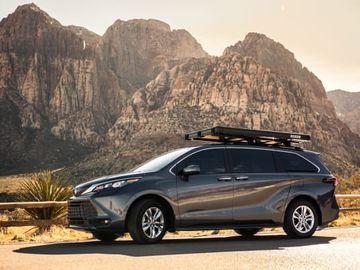








West of the Strip, the Mojave floor ends at a sandstone escarpment, red-orange rock the whole length of Red Rock Canyon's scenic loop, and the afternoon light climbs the wall while you sit at the pullouts. Hikers and climbers leave the pavement for the rock, and the loop keeps going along the base. The BLM campground just outside the loop is where you sleep, and the Strip and Fremont Street are the evening.
Lock that campground first on Recreation.gov. The van is the second booking, and a dry BLM pad is a different night from a hookup site. The pads have no hookups, and the campground closes June 1 through August 31. Larger rigs fit only sites 1 through 45.
The BLM requires a timed-entry reservation to drive the loop from October 1 through May 31, between 8 a.m. and 5 p.m. If you miss a booking or hit the summer closure, rugged dispersed camping on the unpaved routes off Lovell Canyon Road stays open year-round with no reservation.
Kyle Canyon and Mount Charleston
Kyle Canyon climbs into the Spring Mountains, a pine and bristlecone ridgeline around Mount Charleston that holds snow in winter. Fletcher View has electric hookups year-round, and the Forest Service suspends reservations from mid-July through mid-September for monsoon flooding.
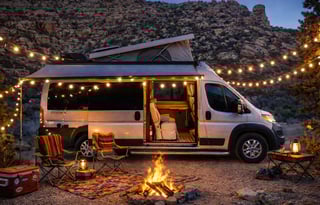
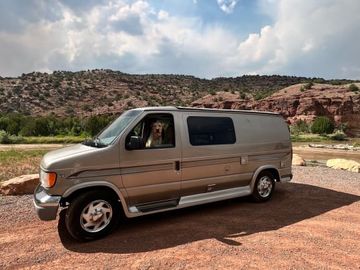
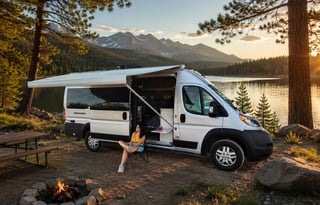
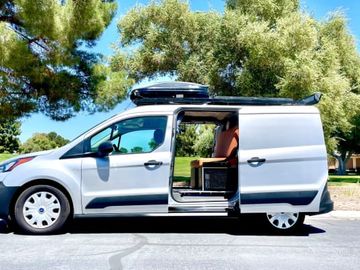
Hilltop is farther up the same canyon and caps trailers at 25 feet. If you need more sleeping space than a van bunk, look at RVs for rent in Las Vegas.
Valley of Fire
At Valley of Fire the Fire Wave's sandstone is striped in a swirl on the desert floor. Nevada State Parks closes that loop and several other trails from May 15 through September 30 for heat, and closes the park to visitors for a short maintenance window at the start of December. Both campgrounds are reserved ahead, and some pads have power and water.
Lake Mead
Turquoise water meets bare tan rock at Lake Mead, and Hoover Dam's concrete arc is the day from the shoreline. Park Service campgrounds have no hookups. The concession campgrounds at Callville Bay and Echo Bay have electric, water, and sewer. Some Boulder Beach loops close in summer, and the lake keeps dropping as of September 2026.
Death Valley
At Furnace Creek the basin is below sea level, salt-flat glare in every direction. The dune field at Stovepipe Wells is the other picture on that drive. Furnace Creek Campground is the only Park Service campground in the park that takes reservations, from October 15 through April 15, and it is first-come the rest of the year.
Texas Springs and Stovepipe Wells are the other Park Service campgrounds. Cell service is very spotty, often none, and a summer overnight is an endurance trip.
NASCAR Cup weekends at Las Vegas Motor Speedway sell trackside RV camping with hookups, and Camp EDC in mid-May sells an RV pass at the same speedway. Those weekends put event campers and desert trips on the same dates.
Zion and St. George are Utah nights. The Grand Canyon is a Flagstaff trip. Joshua Tree is a California trip, and Great Basin is the rest of Nevada.