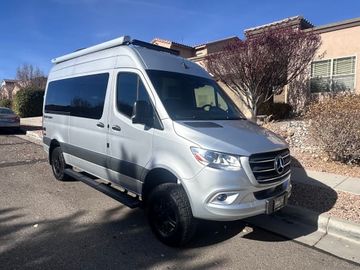
![[ Dakini ] “Enchanted Adventures!” 2019 Roadtrek Simplicity SRT](/cdn-cgi/image/width=360,height=270,fit=cover,quality=80,format=auto/https://res.cloudinary.com/outdoorsy/image/upload/a_exif,q_auto,f_auto,w_auto,h_400,w_600,c_fill/v1748835671/p/rentals/457242/images/vievblktkot8umwl66yx.jpg)









Ponderosa and meadow campgrounds line the East Fork on NM-4, close enough that you walk to Jemez Falls after breakfast and hear the river after dark. From the loop the trail follows the water, and the falls come through a granite gap at the end of it. Jemez Springs is the village you pass, red rocks near the pueblo on the way into the trees. Stay two nights so the walks can stack.
Short forest trails lead to steaming pools along that corridor, day use, a soak between nights in the trees. Battleship Rock is the trailhead for those walks, and Soda Dam is the roadside stop on the way. McCauley Warm Spring is the pool you walk to from the rock, on the East Fork Trail that continues toward the falls. NM-4 is the spine of the weekend, and you keep coming back to the same loop to sleep.
The improved loop at Jemez Falls is the overnight next to that walk, and it takes trailers and RVs to 40 feet. If you need a longer rig or more sleeping space than that, look at RVs for rent in Albuquerque. Book the loop before you book the van.
Redondo, higher in the trees, is reservation-only. San Antonio Campground runs May through October next to the Spence and Battleship Rock trailheads. Summer afternoons bring thunderstorms, and nights run cold at that elevation.
The road keeps climbing to Fenton Lake State Park, a mountain lake camp at the top of the corridor, past the river loops and the village. Bandelier and the Valles Caldera, on the Los Alamos side of this high country, belong to a Santa Fe campervan trip.
The Sandias
The west face is the escarpment you see from town. You walk La Luz in switchbacks through five life zones, desert scrub into alpine forest, with the tramway cabin crossing the escarpment and Albuquerque and Rio Rancho spread out below. There is no campground on the mountain, so you come down for the night. As of September 2026, a Forest Service closure covers the Crest recreation site and the Crest Road above the 10K trailhead through fall 2027, so La Luz ends at the tramway. The Sandia Peak Tramway runs during the closure, so the ride over the escarpment is still a day from town.
Petroglyph National Monument is the west mesa day in town, volcanic escarpment and carved rock, day use only. Old Town and the Bosque are the riverside walk when you stay in the city.
The Balloon Fiesta in October
Dawn on the launch field fills with balloons, and the RV lots sit in the dirt along the edge so the morning starts outside the door. The fiesta's on-field RV camping takes a three-night minimum, has no dump station, and sells out months ahead onto a waitlist. The van is the second booking, because those October nights fill every public campground around town too.
When the field is full, Coronado Campground in Bernalillo is the overflow, and it raises rates during the fiesta. The rest of the year it is the close first night north of town, with partial hookups.
The Turquoise Trail to Madrid and Cerrillos
Take NM-14 through Madrid and Cerrillos and walk Cerrillos Hills State Park. The park is day use with no campground, and there is nowhere on that road to sleep in the van. El Malpais, El Morro, and Acoma are New Mexico's.