
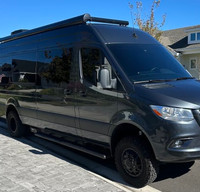
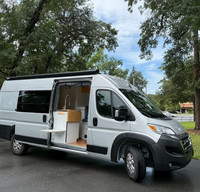
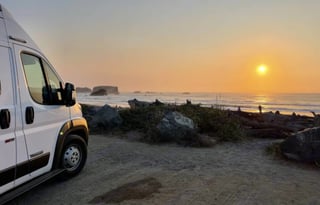
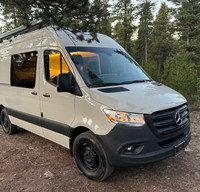
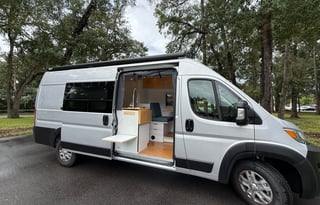
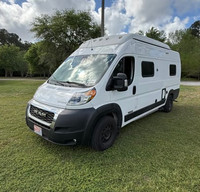
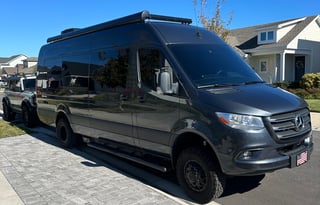



Drive far enough south in Florida and the road gives out over bridges, mangrove on both sides and salt water underneath. Go northwest instead and you finish on barrier islands of white quartz sand with the Gulf on one side and a sound on the other. Inland is a third thing again, rivers that come up out of the limestone and hold the same temperature in August that they hold in January.
So pick your end of the state, then book the night in it before you book the van. The public pads are the scarce half of a Florida trip, since residents can reserve 11 months out and everyone else 10, and winter dates in the Keys, the Everglades and the southwest Gulf go the morning the window opens. Almost nobody drives the whole state in a week anyway, and the version that works is one region taken slowly with the sites already held.
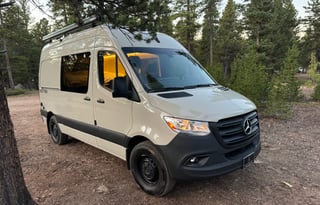
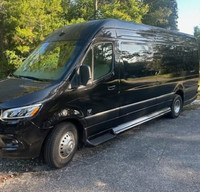
Length is the second question, and it is answered park by park, 23 feet at Bahia Honda, 30 at Little Talbot Island, 50 at Collier-Seminole. Hold the site, then rent to the tightest night on the list.
The dates that make a region worth the drive are the dates everyone else has already booked. Winter fills the southern parks, spring break fills the panhandle, a launch week fills the Space Coast and a race weekend fills Daytona, and each of those takes the public pads and the local vans together. Check what is on before you fix the week, because one date decides both bookings.
South Florida and the Keys
The Overseas Highway is the drive people are picturing when they rent a van in Florida. It runs key to key on bridges with shallow water on both sides, and the campgrounds strung along it are on the water rather than set back behind it, which is the whole reason to sleep down there instead of driving down for the day. Campervan rentals in the Florida Keys covers which parks to aim for and in what order.
Length decides more in the Keys than anywhere else in the state. The tightest loop at Bahia Honda stops at 23 feet hitch to bumper as of August 2026, which a campervan clears and a 30-foot motorhome does not. If the trip needs more beds than a van has, RV rentals in Florida is the other way to run it, on the longer loops inland.
West and south of Miami the subdivisions quit and the Everglades take over, sawgrass to the horizon and alligators sitting in the roadside ditches. It is a place to sleep in rather than drive through, and the campgrounds inside it are plain on purpose.
Up the coast, Fort Lauderdale keeps county campgrounds under old cypress in the middle of the suburbs, which makes an easy first or last night on this side of the state. Farther north, West Palm Beach puts you next to the pine scrub and the blackwater river at Jonathan Dickinson in Hobe Sound.
Southwest Gulf
Cross the peninsula on the Tamiami Trail or Alligator Alley and you come out on the Gulf side, which runs quieter than the Atlantic coast does. Naples is the mangrove end of it, where the campgrounds back onto tidal creeks and the estuary starts about where the sites end.
North of there, Fort Myers sits on the Caloosahatchee, the river and lock system that cuts clear across the state to Lake Okeechobee. Sanibel and its shelling beaches are a day out and back from the campgrounds around town.
Panhandle islands
The panhandle does not feel like the same state. The sand is white quartz, fine enough to squeak underfoot, and the camping worth planning a week around is out on the barrier islands with the Gulf on one side and a sound on the other.
Pensacola anchors the west end, with a national seashore and a brick fort out on the far tip of the island. Destin is the calm-water version, green shallows off the beach and a charter fleet running out through the pass.
Panama City Beach sits at the other end of that run, with a state park at the pass where you can walk from the site to the Gulf on one side or the flat water on the other. Three days on this coast is a different holiday from three days in the Keys, and people who try to do both in one week enjoy neither.
Springs and north Florida
Inland north Florida is the summer answer. Water comes up out of the limestone at one steady temperature and runs off in short clear rivers, and the state parks up here are built around them.
Ocala is the middle of that country, with the big spring runs and a national forest of sand pine on its doorstep. Gainesville has the prairie basin south of town, wet grassland and open sky that looks nothing like the rest of the state.
Live Oak sits on the Suwannee, tea-colored water with springs feeding into it from the banks. Tallahassee is the red clay and canopy road end of the region, and the spring everyone goes to see is south of town with no campground of its own, so it works as a day out from wherever you park.
Jacksonville puts you back on the Atlantic, where the barrier island camping north of the river has surf on one side and salt marsh on the other.
Central Florida and the Space Coast
Orlando is the practical middle of the state, with a swimming spring inside a state park on the north edge of the metro and the theme parks as days out rather than the reason to have a van. Clermont trades flat for elevation just west of there, a chain of lakes with climbs between them steep enough that cyclists drive in to ride them.
Lakeland opens onto the Green Swamp, the headwaters country for several of the state's rivers and the emptiest ground anywhere near I-4.
East on the coast, Melbourne is the Space Coast base, close enough to the pads that a night launch lights up the campsite. Daytona Beach is the north end of that stretch, with the speedway inland and Tomoka State Park on the Halifax River for the nights.