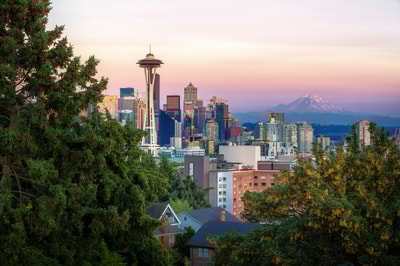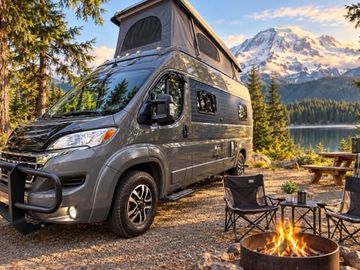
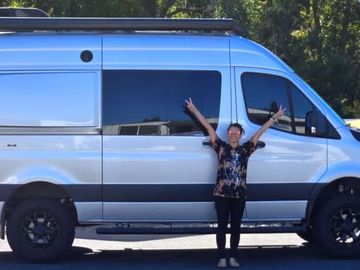
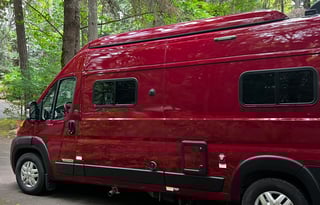
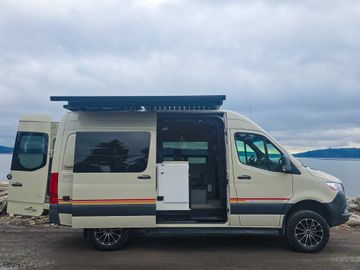
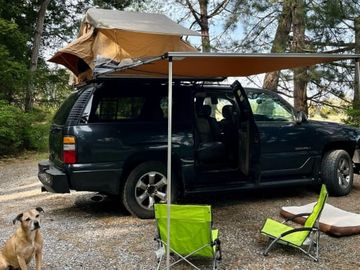






Seattle is one of the few large American cities where the campervan question is really a ferry question. Several of the best trips out of here start by driving onto a boat, and Washington State Ferries charges vehicles by length, so the van you choose changes the arithmetic before you have left the city.
Ferries charge by the foot
WSF sorts vehicles into length bands: under 14 feet, 14 feet to under 22 feet, and then an oversize table that starts at 22 feet and steps up again at 30, 40 and 50 feet. Within the 22-to-30-foot band the fare splits a second time by height, at 7 feet 2 inches. Anything wider than 8 feet 6 inches pays double the rate for its length.
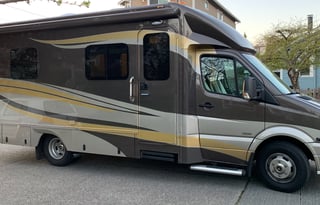
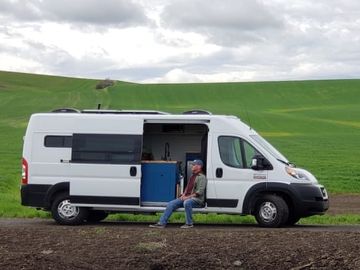
The 22-foot line is the one that matters for a van. A 144-inch-wheelbase Sprinter-style van is roughly 19 and a half feet, and books like a car. The plain 170-inch version is already about 22 feet 8 inches and the extended one runs over 24, so both land in the oversize table, and a high roof stands close to 9 feet, well past the 7-foot-2 step, so they pay the taller rate too. You declare length when you buy the ticket, so get the real number from the owner rather than eyeballing it.
Only two routes take vehicle reservations: Anacortes to the San Juan Islands and Port Townsend to Coupeville. Sailings from Colman Dock downtown to Bainbridge and Bremerton, and from Edmonds to Kingston, are first come, first served, which means queueing in a holding lot. Anacortes is about 82 miles north of the city, roughly an hour and forty minutes via I-5 and SR 20. Hops between the islands are free eastbound; you pay heading west.
Where people actually point a van from here
- Olympic National Park. Take the Bainbridge or Edmonds-Kingston boat, then US 101. Port Angeles is about two and a half to three hours from Seattle including the crossing, and the full 101 loop around the peninsula runs roughly 330 miles.
- Mount Rainier National Park. Around two hours and 90 miles to the Nisqually entrance, the one that stays open year-round.
- The Cascade Loop. A 440-mile circuit that starts in Everett, 30 miles north of the city: US 2 over Stevens Pass, US 97 down the Columbia, and SR 20 back west through North Cascades National Park.
- Vancouver, British Columbia. 142 miles up I-5, but budget separately for the Peace Arch crossing, which can add well over an hour on a summer weekend.
The dry window here is narrow
This is the opposite of a desert city. Seattle rainfall bottoms out in July and August, and the wet season runs roughly October through May, which makes July through September the dependable stretch for sleeping in a van without hookups. Late August and September also bring wildfire smoke in most recent summers, usually worse east of the Cascades than in Puget Sound; the state runs an interagency smoke forecast worth checking before you drive east.
Roads follow the same calendar. SR 20 closes each winter and takes weeks of clearing to reopen. Chinook and Cayuse passes at Rainier close seasonally too. Sunrise Road inside Rainier generally opens in late June or early July. Hurricane Ridge in Olympic is plowed Friday through Sunday only in winter, with uphill access confined to a daytime window, and every vehicle is required to carry chains regardless of drivetrain.
Mount Rainier has used timed-entry reservations for its Paradise and Sunrise corridors in some recent seasons and dropped them in others, so check the park's own page before you commit to a date. Either way the lots at both fill on summer weekends, and the park's advice is to arrive before 7 a.m. or after 4 p.m., or come midweek.
Two reservation systems, and no hookups in the parks
Washington State Parks book through the state's own site rather than recreation.gov, reservable up to nine months ahead for arrivals between May 15 and September 15; outside that window most state park camping reverts to first come, first served. National park and national forest campgrounds use recreation.gov on a rolling six-month window, and the busier Olympic campgrounds such as Kalaloch and Hoh open loop by loop rather than all at once, so one missed morning is not the end of it.
Plan on being self-contained. None of Rainier's campgrounds have electric, water or sewer hookups, and length caps run from 27 feet at White River to 32 at Ohanapecosh and 35 at Cougar Rock. The Park Service's own Olympic campgrounds have no hookups either, and many sites are sized for rigs around 21 feet; a couple of in-park concession resorts do offer them. Budget for three separate passes on a single trip as well: a Discover Pass for state park and DNR parking, a Northwest Forest Pass or day pass at many Mt. Baker-Snoqualmie and Olympic National Forest trailheads, and the national park entrance fee on top.
Pickup and parking in the city
There is no RV or campervan counter inside the SEA terminal. Peer-to-peer vans sit with their owners around the metro, and many owners will deliver to the airport or a nearby hotel for a fee; light rail from SEA into downtown is the cheap way to reach a city pickup on your own.
Do not plan on leaving a van on a Seattle street overnight. City code caps on-street parking at 72 hours on the same block, and separately bars vehicles over 80 inches wide from parking on streets outside industrial zones between midnight and 6 a.m. Routing a tall van around low clearances is what the RV navigation apps are for. Downtown garages are mostly too low for a high roof: Pike Place Market states its garages cannot accommodate RVs and posts a 6 foot 8 inch height limit. Park the van outside the core and use transit for a city day.