

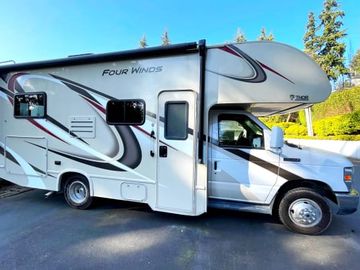
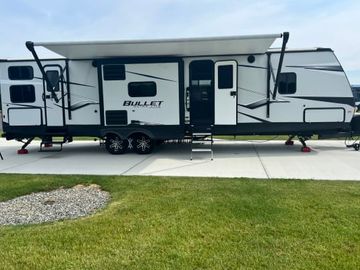

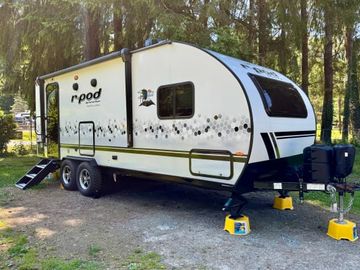
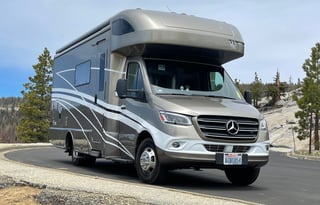
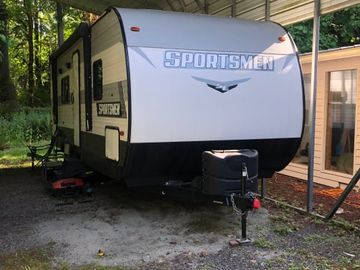

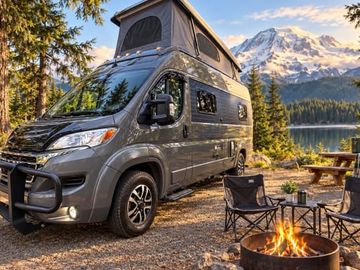

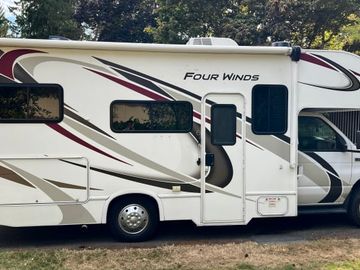








Old-growth stands close around the sites at Sol Duc, and on the third night out the sulfur smell of the hot springs still hangs in the trees after the kids fall asleep in the bunk over the cab. Two nights later the Pacific breaks below the bluff sites at Kalaloch, with drift logs piled along the beach. Lake Crescent comes before Sol Duc, and after Sol Duc, US-101 runs south through Forks to a night in the Hoh rain forest.
The usual way around is clockwise from Seattle over five or six nights, and the nights fall into a pattern built for a rig with a family and a set of tanks aboard. The north side runs on hookups at Port Angeles, Lake Crescent and Sol Duc, the Pacific side is two dry nights in the Park Service campgrounds, and Lake Quinault plugs you back in before the drive home.
Port Angeles, Lake Crescent and the Sol Duc hot springs
Night one lands on the Port Angeles side of the peninsula, the easiest stop on the loop to reach from Seattle. Elwha RV Park has full hookups and pull-through sites for big rigs, so nobody spends the first evening backing in. Hurricane Ridge is up the hill from town, and for two people it and the park's north-side campgrounds make a shorter trip that suits a smaller rig out of Seattle.
West of Port Angeles, US-101 follows the shore of Lake Crescent, and a lakeside night there is worth the short driving day. Log Cabin Resort has RV sites up to 35 feet with full hookups, electric and sewer, and the Park Service campground at Fairholme, on the same lake, has a dump station.
South of the lake, the Sol Duc road climbs into old-growth to the hot springs, and a soak before dinner is the reason to stop. Sol Duc Hot Springs RV Park has back-in sites with water and electric that fit rigs from 26 to 36 feet.
The Hoh rain forest and the Kalaloch bluffs
After Sol Duc, US-101 swings west and south through Forks, and the Hoh road leaves the highway to follow the valley into the rain forest, where moss hangs off the big-leaf maples and the campground sits under the canopy. Kalaloch comes next, back out on US-101 along the ocean, and it's the night the whole loop builds toward.
Both are Park Service campgrounds sized for smaller vehicles, and the Hoh and Kalaloch have sites for 21 feet with only a few that take up to 35. Those few longer sites decide the rental, so reserve the two nights first and pick the motorhome to fit the sites you got.
The Hoh has no dump station and Kalaloch does. Roll into the Hoh with the tanks emptied at Lake Crescent, then dump again at Kalaloch before heading south.
Lake Quinault and the drive home
Lake Quinault closes the loop in the peninsula's southern rain forest, a lake night after two on the coast. Rain Forest Resort Village has back-in RV sites with water and 30-amp electric. Graves Creek, farther up the valley, does not allow RVs or trailers, so the rig stays at the lake.
From Quinault, US-101 bends back east toward Olympia and I-5 north to Seattle. If the calendar has room for another trip, Mount Rainier is the other big park in reach, the mountain filling the windshield from the park road, and the Tacoma RV page covers its campgrounds and the base outside the gate.
Seattle to San Francisco or Los Angeles on US-101
Below the Olympic Peninsula, US-101 keeps going, and on the Oregon coast it climbs over one headland after another with a beach in each gap. Families running it one way to San Francisco or Los Angeles give the coast most of their nights and lean on I-5, inland, for the stretches they'd rather cover fast, while others point the rig east over the Cascades toward Salt Lake City or Denver, a route the Washington RV page lays out with the rest of the state.
Reserve the coast campgrounds before the rig, in the same order as the Olympic loop, because each one's length limit decides which motorhome fits. The return city is set on the listing: Cruise America, whose Seattle hub is in Everett, states that it offers one-way rentals between locations, and El Monte RV and Road Bear RV each list a Seattle branch.
