







West of Indianapolis, sandstone ravines at Turkey Run State Park use the creekbed as the trail, wet underfoot between the canyon walls. You climb out on steel ladders bolted into the rock and stand above the creek. Hemlock and old-growth beech and walnut hang over that cut, and a suspension bridge puts you across Sugar Creek with the cliffs still close. Fall color hits those Sugar Creek canyons, and spring is when the water rises through the streambed stretches.
Turkey Run is the first night out of Indianapolis, out I-74 through Crawfordsville and up State Road 47. Make the electric loop the first pad and sleep in the park the night you leave the city.
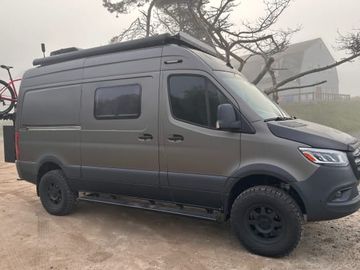
The electric campground has 213 sites, a camp store, and a dumping station, so you can stay on the loop without a town run. You walk into the ravines from the site and leave the van on the loop, close enough that the canyon is the morning, not a drive. A canoe on Sugar Creek runs under those cliffs for a day on the water, and the suspension bridge is the landmark you float under, sandstone on both banks. Summer and fall weekends fill the loop, so book it early.
Along Sugar Creek, Shades State Park has Devil's Punchbowl and Silver Cascade on sandstone cliffs. It is the next park down the same creek, a quieter day on the water and a short drive from Turkey Run's loop. Come back to Turkey Run to sleep, because the Shades campground has no hookups.
Brown County State Park's hills and fall color live on the Bloomington campervan page. McCormick's Creek is a limestone-canyon day trip in that direction, a CCC stone arch and waterfalls on the creek. The campground is closed for tornado recovery as of September 2026, though the park stays open for a day walk through the canyon, and the nature center, Canyon Inn, and cabins remain open.
Indianapolis 500 camping lots
Georgetown Road and 16th Street go nose-to-tail with rigs the week of the Indianapolis 500. The pagoda is over the fence line, and the infield Snake Pit crowd is the loud corner of the same grounds. You sleep in a numbered lot with the track as the neighbor, on the north, west, or south side of the Speedway, for that late-May week. Some lots have 30-amp or 50-amp hookups, and some are dry.
Those lots are the overnight. A parking pass for the race does not let you sleep there. As of September 2026, the Speedway's camping page shows the lots selling out months ahead, so you book the lot first and the van second.
Race week is a late-May spike, and it collides with every campground within an hour of downtown, Turkey Run included. The same dates fill the trackside lots and the public parks. If you need more sleeping space than a campervan holds for that group weekend, look at Indianapolis RV rentals.
The dunes and a Notre Dame weekend are on the South Bend campervan page. Other Indiana regions are on the Indiana campervan page.