

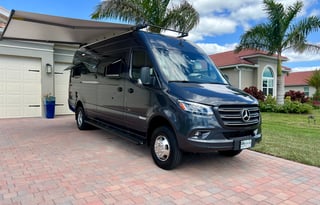
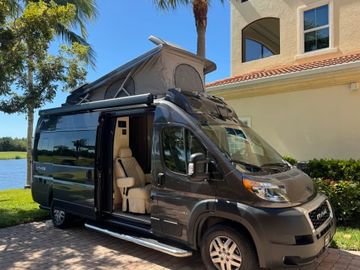
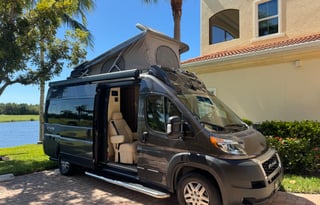
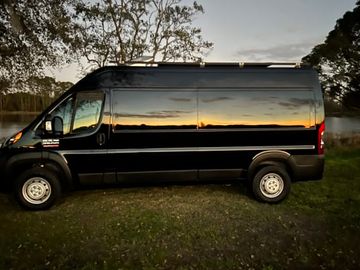
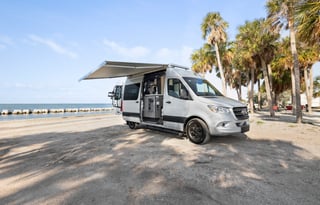
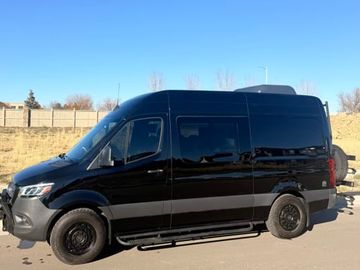
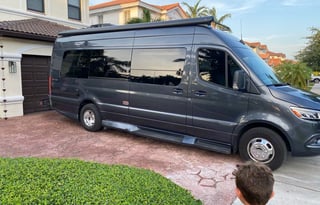
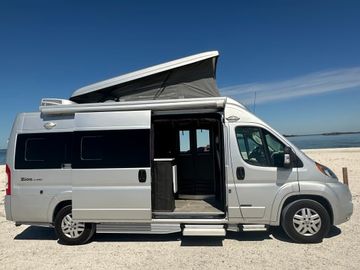
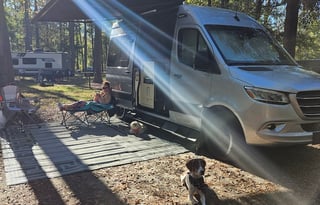
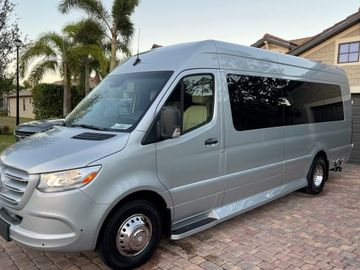








Southeast of Naples the Tamiami Trail runs out of subdivisions and into mangrove, and Collier-Seminole State Park is the campground sitting on that line. Saw grass and salt marsh lie along one side of US-41 and cypress and palm along the other, and the park's canoe trail works out through mangrove estuary toward the Gulf. This is where the van sleeps, and the beach is the day trip. Book the site first. All 105 pads go through Florida State Parks and the dry-season dates go the week the booking window opens, so the van is the second call, matched to nights you already hold.
If you can get a boat onto the roof, that paddle is the reason to camp here instead of at an RV park in town. The estuary is quiet water, tidal and shallow, and the mangroves close in far enough that the highway noise quits a few minutes in. The ramp is $4 plus tax on top of camping if you are launching something with a motor on it.
The campground runs 105 sites, every one of them with electricity and water, a grill and a picnic table, with hot showers in the restrooms and laundry in two of them. Camping is $22 a night plus tax as of August 2026, plus a $7 nightly utility fee on RV and cabin units and a nonrefundable $6.70 reservation fee on the booking.
The dump station is centralized rather than plumbed to the pads, so the tanks get emptied on the way out instead of mid-week. Fill fresh water at the site and plan the dump around your exit.
Sites take rigs up to 50 feet, well past the length of anything sold as a campervan. If the trip has more people in it than a van has berths, an RV out of Naples parks in the same loops.
Reservations open 11 months out for Florida residents and 10 for everyone else, which is as much notice as anyone gets. There is no in-town substitute if the park is full, since Delnor-Wiggins Pass does not allow camping and the next public campground is farther east in Big Cypress on its own reservation system.
Winter is the season down here, dry and mild, and it is when the campground books out. Summer on the mangrove edge is hot and wet, the bugs arrive at dusk, and the storms come through most afternoons. The signs along this stretch of US-41 warn about panthers, and they are not decorative, so the drive back from dinner in town is a slow one after dark.
The Trail east of the park is worth driving even if you sleep at the state park both nights. The road goes straight through Big Cypress with canal water along the shoulder, and the wading birds and the gators work that ditch line close enough to see from the driver's seat. Pull off where there is a proper turnout rather than on the soft grass.
When Collier-Seminole is full, the overflow is farther east on the same highway. Midway Campground in Big Cypress National Preserve has electric sites, water, flush toilets and a dump station, set around a lake with limited shade, and it takes no cash at the gate, so book it before you drive out. The Trail carries on east from there and comes out the other side of the state at Miami, if the plan is to cross rather than come back.
Delnor-Wiggins Pass, the beach day north of town
The Gulf half of a Naples trip is Delnor-Wiggins Pass State Park, a mile of barrier island at the north end of town where the sand stops at the pass and the boats run out through it. Parking is strung along one road with the dune between you and the water, so you pick a lot, walk over, and stay put. The north end by the pass is where people fish and watch the outbound traffic.
Go early on a winter weekend. The lots are the limiting factor at this park, not the sand.
The park opens at 8 a.m. and closes at sundown every day of the year, and admission is $6 per vehicle for two to eight people as of August 2026. Camping is prohibited, so the van comes back down the coast to Collier-Seminole for the night.
North of the pass the coast belongs to Fort Myers, which keeps its own public campground inland on the river, and the rest of Florida picks up from there.