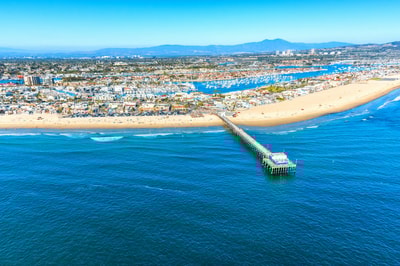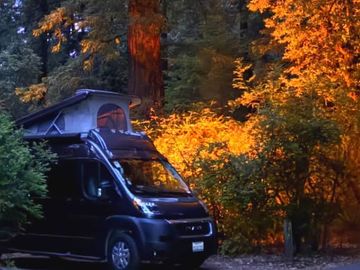
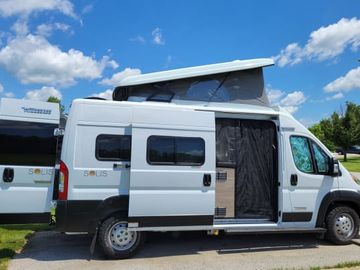
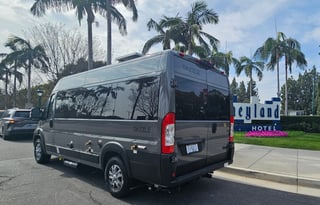
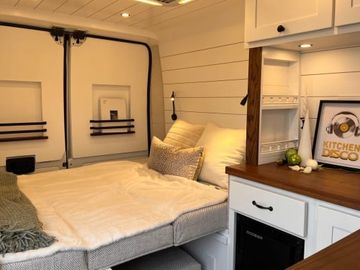
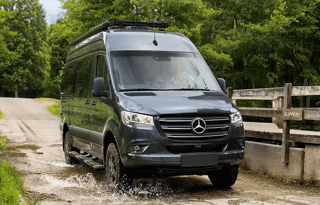
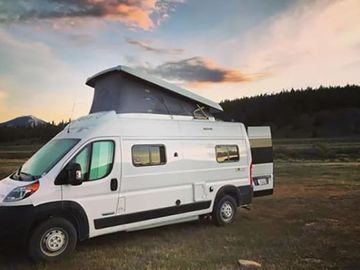
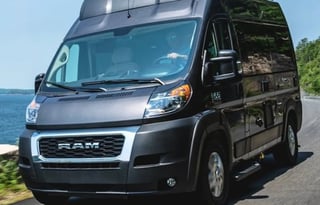
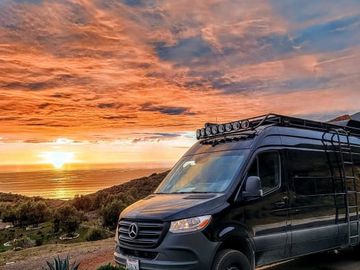
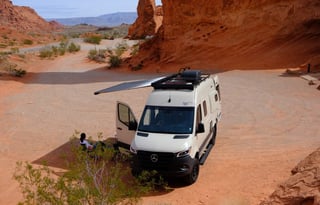
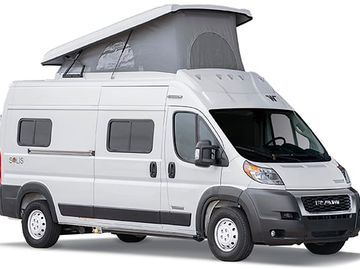








Run down Pacific Coast Highway to Crystal Cove State Park and camp up on the Moro bluffs, three miles of coves and tidepools between Corona del Mar and Laguna Beach. Book Moro early through ReserveCalifornia, because summer weekends and holidays sell out. Sites are back-in only, and a van conversion belongs in one of the 30 low-impact dry sites, not the hookup pads built for rigs up to 38 feet.
The days are easy from up there: stairs and ramps down to seven separate coves, tidepools at Reef Point and Pelican Point, and Moro Canyon trails climbing inland behind the campground. If you have an hour, park at the Los Trancos lot, five dollars an hour, and walk the half-mile trail through the tunnel to the Historic District, 46 rustic cottages from the 1930s and 40s standing on the sand around the mouth of Los Trancos Creek. Twenty-one of them rent overnight and the Beachcomber Cafe runs out of a restored one; you still sleep in the van back at Moro.
Up the coast in Huntington Beach, Bolsa Chica State Beach has beachfront hookup pads right on Pacific Coast Highway, but it takes factory-built self-contained RVs only, with running water, an internal flushable toilet and holding tank, a shower, and a galley. Conversion vans and cassette toilets get turned away at the gate, so most rental campervans don't qualify for a spot there.
For the beaches south of here, Doheny, San Clemente State Beach, and San Onofre, the base is San Clemente. The rest of the Southern California coast runs off the California hub.
Booking and sleeping at Moro Campground
Moro stays open year-round on the bluff, with 28 hookup sites on water and electricity for vehicles up to 38 feet and 30 low-impact dry sites capped at 25 feet for van conversions, soft-sided trailers, and tents. Every site is back-in, check-in 3 p.m. and checkout 1 p.m., with a dump station near the entrance and an extra vehicle at 15 dollars a day. Wood and charcoal fires are banned park-wide, so cook on a compressed-gas stove or grill; there are no fire rings to use anyway. Dogs are fine in the campground and on paved roads but not on the beach or in the backcountry, and day use is 15 dollars, 20 on holidays and summer weekends, as of August 2026. The park doesn't post a nightly site rate, so check the number on ReserveCalifornia when you book.
A conversion tops out at 25 feet in those dry sites; if you want the length and beds of a full motorhome on the same coast, that's the RV rental.