




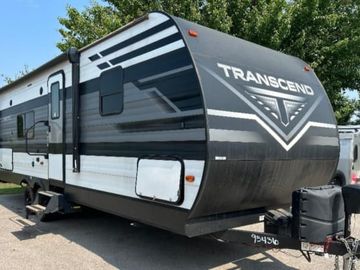
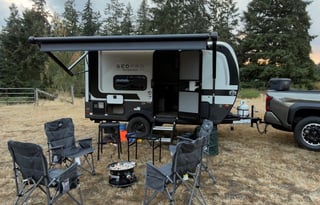
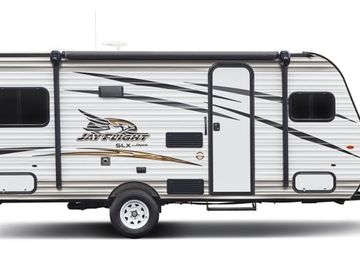








Your first night under Mount Rainier comes at the end of an afternoon spent watching it grow, the glaciers hanging higher over the Nisqually road at every bend until they fill the top of the windshield. By dark the rig is parked beneath old-growth cedar at Cougar Rock, and in the morning the road keeps climbing to Paradise, where the trails head straight up toward the ice. From there Stevens Canyon Road carries the loop east across the park, and US-12 brings you home through Packwood.
In a motorhome the week trades nights under the trees for hookup nights in the towns outside the park, and the rig's length and height decide which campground and which road out it can use. Mount St. Helens makes a second leg, down US-12 and I-5 to Castle Rock.
Cougar Rock and Ashford, the nights below Paradise
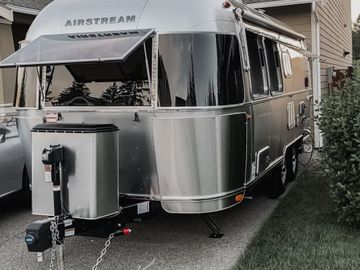
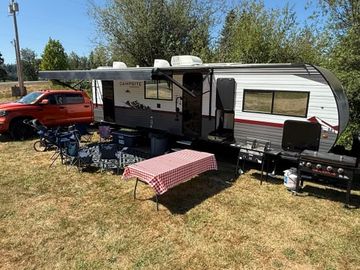
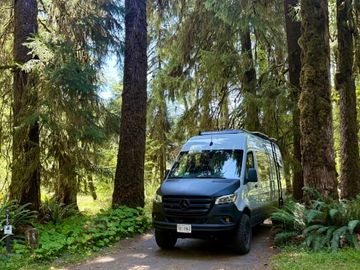
A night at Cougar Rock puts you partway up the road to Paradise, so the meadows are a short drive the next morning. The Park Service takes RVs to 35 feet and trailers to 27 feet at Cougar Rock and books its sites through Recreation.gov, from late May into early autumn. Reserve that pad before you pick the rig, since the cap decides which motorhomes on your shortlist can come at all. For two people doing the park on their own, a campervan from Tacoma sits well under the limit.
None of Rainier's campgrounds have electric, water or grey-water hookups, and there's no dump station inside the park, so roll in with empty tanks and a full fresh-water tank. After a couple of dry nights the rig wants a hookup, and that's what Ashford is for.
Ashford sits on SR 706 just outside the Nisqually entrance, and it also makes the easiest first night when the Cougar Rock dates didn't come through. Mounthaven Resort is half a mile from the gate, with full-hookup sites, 30-amp power and room for rigs to 36 feet. In high summer that hookup keeps the air conditioning going through a warm evening.
Stevens Canyon Road to Packwood
Past Paradise, Stevens Canyon Road shows the mountain from a new side before the loop leaves the park for US-12. Before you commit to it, check the rig's height on the listing. The Park Service lists the Stevens Canyon tunnel at 12 feet 6 inches and the road's winter closure for late October, both as of September 2026, and a motorhome that won't clear the tunnel goes back out through Nisqually.
The loop's last night is in Packwood, on US-12, before the highway carries you west toward I-5. Packwood RV Park has full hookups with water, sewer and electric all year, so the tanks from the park nights get emptied here and the air conditioning comes back on.
Mount St. Helens from Seaquest State Park
From the boardwalk across the Silver Lake wetland at Seaquest State Park, Mount St. Helens stands on the far side of the water with its blown-out summit in plain view. A tunnel from the park leads to the Mount St. Helens visitor center, and SR 504 climbs east from there into the blast-zone hillsides on the Coldwater side. A landslide has closed SR 504 short of Johnston Ridge, and as of September 2026 the Forest Service expects the observatory to reopen in 2027, so plan the day around Coldwater and the visitor center.
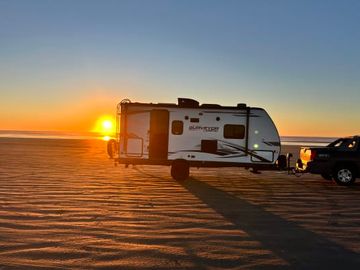
Seaquest sits on SR 504 east of Castle Rock, and St. Helens works as the opening leg of the week or the closing one. Full hookups there are only in the T-loop, 15 sites in all, with a limited number of sites long enough for rigs to 50 feet, so lock one in before you book the motorhome. The park's dump station takes care of the tanks on the drive home to Tacoma.
Back in Tacoma, Point Defiance and its zoo, the Nisqually refuge and Dash Point State Park make easy day outings on either end of the week, and the Tacoma campervan page covers all three. Washington's other RV loops, from the Olympic Peninsula to the North Cascades, are on the Washington RV page.
