

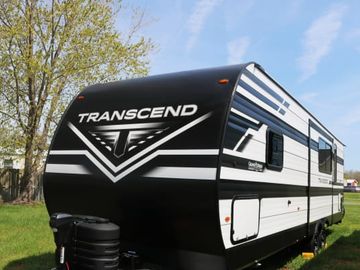
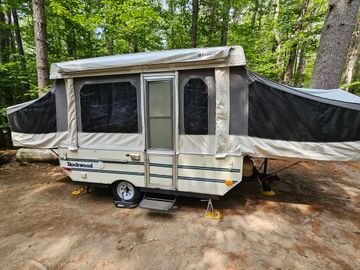

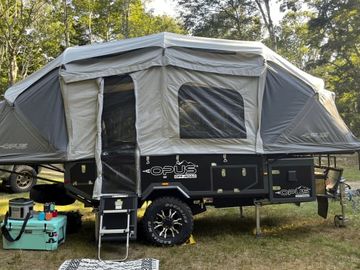

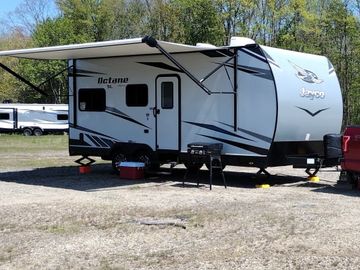










At dusk on the Eastern Shore, the Chesapeake goes flat to the horizon and the sun drops straight into it. Park for a week at Cape Charles and that hour comes back every evening.
Getting there is the other half of it. North of Norfolk the road leaves the mainland and runs low across the mouth of the bay, close enough to the water that a motorhome feels like it's driving on it. On the far side it lands on the Eastern Shore, a flat strip of farmland and marsh between the bay and the Atlantic.
That bay week is the Norfolk RV trip families actually take, and the crossing is a big part of the reason. The Chesapeake Bay Bridge-Tunnel turns the first morning of the vacation into the event, with everyone at the windows as the road disappears underwater. Once you're across, nobody wants to break camp every day, so the plan is one site, set up once, with the bay doing the entertaining.
Sun Outdoors Cape Charles, the bay week on the Eastern Shore
Sun Outdoors Cape Charles is the resort most Norfolk rigs head for, the big bayside campground that longtime visitors still call Cherrystone. It faces west over the Chesapeake near the town of Cape Charles, so the days drift toward the water's edge and the evenings toward long dinners outside while the light goes orange over the bay.
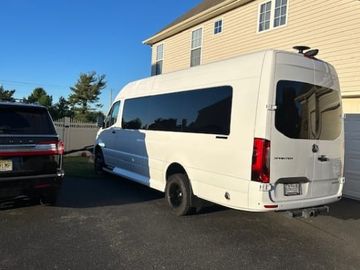
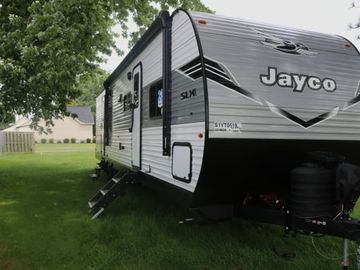
Book the site first and the rig second. The resort's own site rules decide how long a motorhome makes sense, so read the length limits on the reservation before choosing between a mid-size Class C and something bigger. In summer you'll want the air running through the afternoon, which means a site with power. If it's two of you rather than a family, a smaller rig opens up Kiptopeke State Park on the Eastern Shore, Chincoteague and Assateague Island, and Northwest River Park in Chesapeake, and those trips have their own Norfolk page.
Crossing the Chesapeake Bay Bridge-Tunnel in a motorhome
The crossing is the one part of the week you plan around the weather. Out on the trestle there's nothing to break the wind, and a tall, slab-sided motorhome feels every gust. The bridge-tunnel posts a wind chart that settles the question as of October 2026: an advisory goes up at 35 mph, RVs and towed trailers are restricted at 40 mph, only passenger cars and light trucks cross at 50 mph, and at 60 mph the whole thing closes.
Check the forecast the evening before each crossing, and give the last day some slack so a windy morning can't strand the return. Before any of that matters, the rig has to clear the bridge-tunnel's height limit of 13 feet 6 inches for RVs and trailers, so check the listed height, roof air conditioner included, before you book.
Norfolk's harbor and the Battleship Wisconsin
Give Norfolk a day before you cross. The Battleship Wisconsin is moored on the downtown waterfront beside Nauticus, a long gray hull with its big guns still trained over the Elizabeth River. Harbor cruises, Victory Rover among them, head out past the naval base piers where warships tie up, and the Elizabeth River Trail follows the water past Fort Norfolk for a walk or a bike ride before dinner.
The night before the crossing belongs at a campground on the Norfolk or Chesapeake side, close in, so the bridge-tunnel is first thing the next morning. Reserve it before the rig, the same as the bay site, because the harbor night is the one that gets left until last.
If the ocean pulls harder than the bay, Virginia Beach has its own RV page, boardwalk and all, and so does Hampton across the harbor. The Outer Banks, the thin line of dunes and lighthouses south over the North Carolina line, are a different week with their own RV page.