

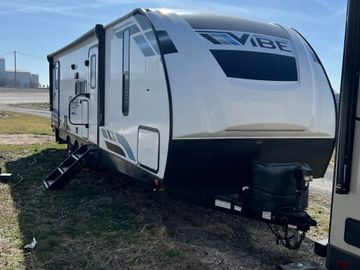
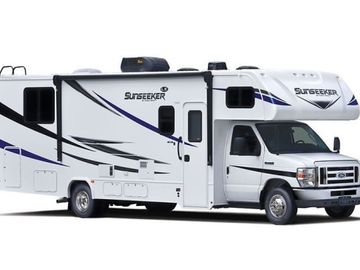



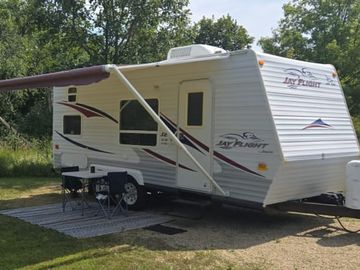

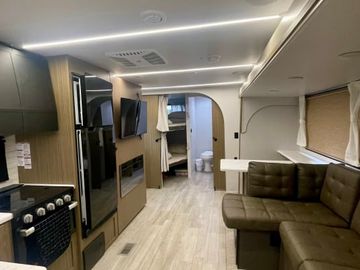
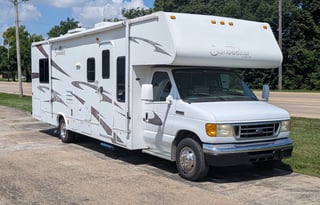
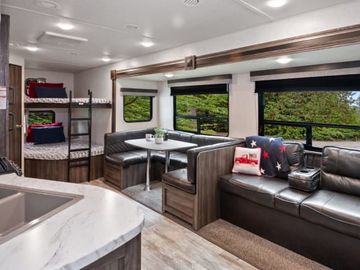








Most Starved Rock trips are planned around what the canyons are doing. In spring the heads of LaSalle and French Canyon pour off the sandstone as waterfalls, and by midwinter those same falls have frozen into hanging columns of ice while bald eagles work the Illinois River below the bluffs. With a motorhome the trip settles into a parked week in the state park's own campground, a different canyon each day and the same site waiting every evening.
Starved Rock holds the north end of the state. The south end belongs to the Shawnee Hills, where the sandstone comes back as bluffs and stone towers above wooded hills, and a lakeshore camp and a forest campground split the nights around Garden of the Gods. Route 66 out of Chicago, the Mississippi bluffs and Lincoln's Springfield fill in the rest of the map, each from a city of its own.
Starved Rock's campground and the canyons by day
Illinois DNR runs the campground inside the park on an East and a West Loop, and the canyons fill the days while the rig stays put on its site. Book the site before you book the rig, because the DNR says the campground fills quickly every year, with weekends from May through October going first.
Every site is electric only, 30 or 50 amp depending on the site, with the dump station at the entry and exit. Water comes from hydrants around the loops, and there are two shower houses. With no sewer at the site, the week runs on arriving with empty tanks, topping up fresh water at a hydrant midweek, and emptying everything at the gate on the way out.
The park allows one RV and one tent per site, so two families sharing the week book two sites, and the kids' tent goes up beside the rig. Two people who'd rather do Starved Rock as a single night on the way to the Lake Michigan beaches have their own Illinois campervan trips.
Lake Glendale and Pounds Hollow in the Shawnee Hills
Down in the Shawnee National Forest the sandstone stands up out of the trees. At Garden of the Gods the quarter-mile Observation Trail passes Camel Rock, Table Rock and Devil's Smokestack, with the wooded hills spread out below the bluffs. It's short enough to walk twice, once in the morning and again when the light goes orange on the rock.
A rig week here splits between two campgrounds. The first nights are at Oak Point on Lake Glendale, a lakeshore camp under the oaks that the Forest Service counts among the most popular in the forest, with 35 electric and water sites and many pads long enough for a 40-foot trailer. The second half moves to Pounds Hollow, 6 miles east of Garden of the Gods with 13 electric sites, close enough to make the Observation Trail an easy evening drive.
Pharaoh, the small campground at Garden of the Gods itself, lists twelve sites with no hookups, and the trail lots allow no overnight parking, so the rig sleeps at Pounds Hollow and comes in on Karbers Ridge Road. For tanks, Dixon Springs State Park keeps a sanitary dumping station with its electric trailer area, which also takes reservations if you want one more night before heading home.
Route 66, Galena, New Salem and Shabbona Lake
Chicago's RV trips are Route 66 west as a one-way, the motorhome dropped at the far end, and a suburban hookup base for a week on the lakefront. West of the city, Aurora's rig trip centers on Shabbona Lake State Park, an electric loop beside a lake anglers fish for muskie.
From Rockford, Rock Cut State Park gives a rig an electric loop in town, and the river week runs west to the old river town of Galena and the bluffs of the Mississippi Palisades. In the middle of the state, Springfield's RV trips are built around Lincoln's New Salem, the reconstructed village where Lincoln lived as a young man, which keeps its own campground. Illinois State Fair week lands in the same stretch of summer, and the fair and New Salem compete for the same rigs and the same pads around town, so book both early.