









Hemlock and rhododendron hang over Deep Creek at the top of West Deep Creek Road, where the water comes loud over its rocks and Great Smoky Mountains National Park begins. From the picnic area inside the boundary, loop trails climb past one waterfall after another. Juney Whank is the one people stop for, a fall that fans out down a rock face with the forest pressed close on both sides.
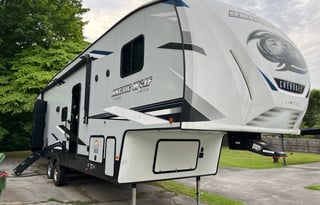
It's a valley you can come back to every day for a week. Walk one loop in the morning, eat lunch at the picnic area, and save another stretch of the creek for the cooler end of the day, with the motorhome just down the road between outings. By midweek the kids have favorite falls, and nobody has packed up camp once.
Big Bear's on West Deep Creek Road, and the park campground at the end of it
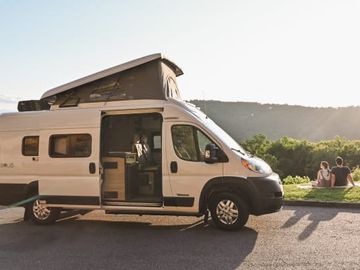
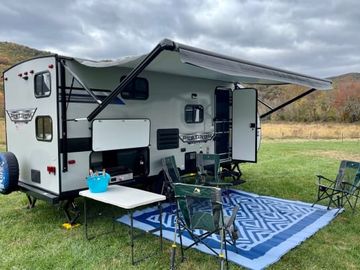
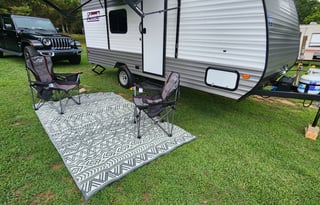
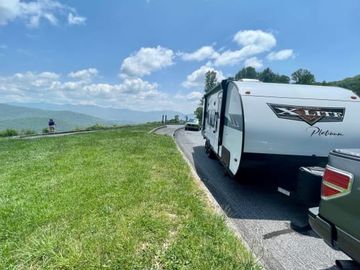
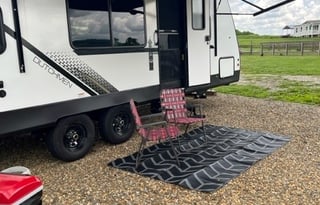
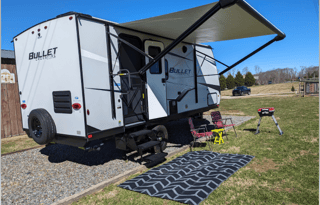
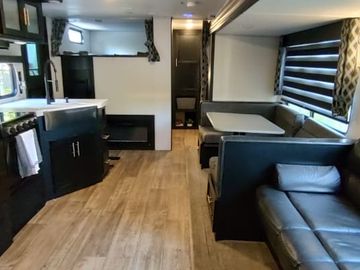
Big Bear's RV Park is the week's base, a full-hookup park on West Deep Creek Road a mile south of the park entrance, open all year. Every RV site has water, sewer, and 30/50-amp power. The park has pull-through, back-in, and creekside sites, so a family that wants the water outside the door can ask for one. There's no bathhouse, which matters little in a rig with its own shower.
Up at the end of the road, the Park Service's Deep Creek campground puts you inside the park itself, with no electric hookups and a dump station and drinking water that run seasonally. Summers in the Smokies are humid, and without power at the site the rig's air conditioner depends on the generator. That makes the hookup pad the summer pick, and the park campground better for a night or two in cooler weather.
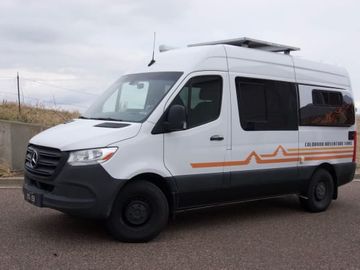
Book the pad before the rig. Every park campground requires advance reservations year-round through Recreation.gov, and the site you land decides which motorhome makes sense. The Great Smoky Mountains RV page covers how each park campground fits a rig by length, along with Smokemont and the Cherokee side of the park over the ridge.
In the shoulder weeks, Big Bear's carries the trip on its own. It stays open after the park campground shuts for the winter, and the valley is still just up the road.
Fontana Lake, Tsali, and the Nantahala Gorge train
From the window of the Great Smoky Mountains Railroad's Nantahala Gorge excursion, Fontana Lake opens up below as the train crosses the Fontana trestle. The round trip leaves Bryson City and covers 44 miles in about four and a half hours, running from early April through the end of October as of October 2026. Leave the rig on its hookups for that day, since Big Bear's is about a mile from the depot. Driving the gorge yourself, with Bryson City as the overnight, has its own page for smaller rigs.
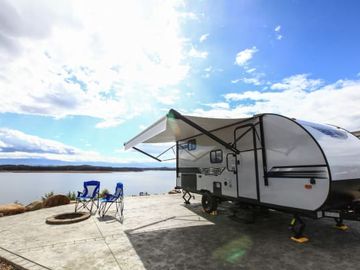
For a night beside the water, Tsali is the Forest Service campground on Fontana Lake, in the Nantahala National Forest. Its trails are shared by mountain bikers and horseback riders, and the lake sits at the foot of the sites. Its 42 sites are first-come with no hookups and open from mid-April through the end of October. The Forest Service says many of them fit small RVs, so treat Tsali as a midweek night or two with the hookup base behind you, not a first stop after a long drive.
A two-person trip that wants several nights on that shore fits better in one of the smaller rigs listed for North Carolina. Cable Cove is another Forest Service campground on the same reservoir, but the agency has planned to decommission its flood-prone sites and its status isn't settled, so confirm it's open before routing a motorhome there.