

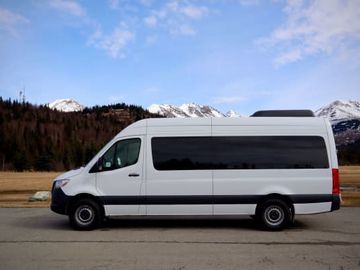
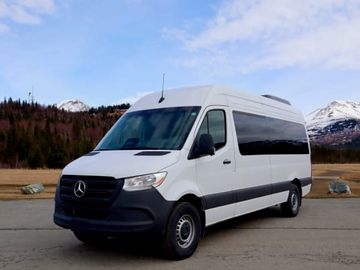
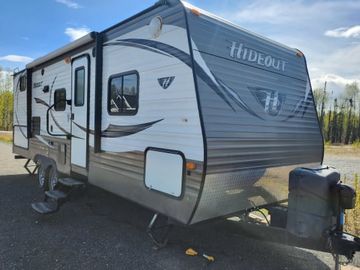
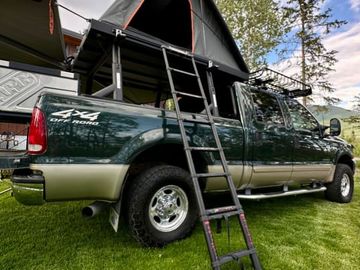
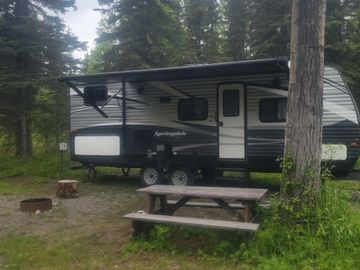
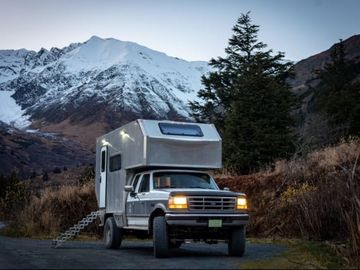
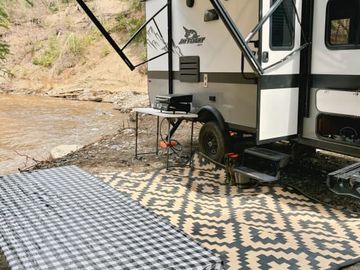
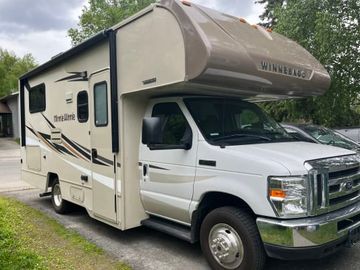
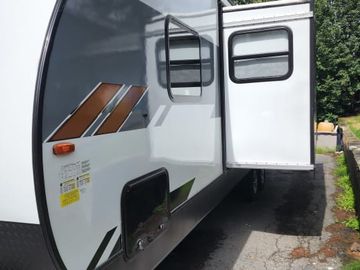
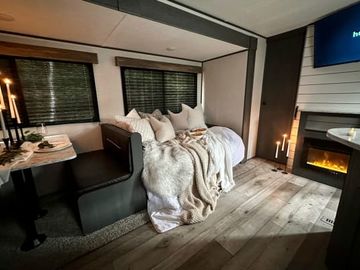








The Homer Spit ends in a row of numbered beach sites, each motorhome backed in with the water just past its front bumper and the light holding late into the evening. That beach row is the far end of the Kenai loop, the Alaska RV week most families plan around. The road down to it passes the Russian River canyon, where dipnetters stand in the current and a net comes up with a salmon thrashing in it.
Seward is the loop's first stop, a harbor town at the end of the road south where the Kenai Fjords boats leave the dock. That boat day, and the two-person version of this coast in something shorter, are on the Alaska campervan page. For a motorhome, Seward means the city-run campgrounds, which sell premium and partial-hookup RV sites alongside dry ones from mid-April through the end of September, with the water typically on by late April or early May. Empty the tanks at the city dump station on Ballaine Boulevard on the way out, because the next nights are dry.
Russian River comes next, a couple of nights in the canyon with the rods out while the salmon are in. The Forest Service campground there has water and flush toilets but no hookups, so the rig lives on whatever it filled in Seward, and a family can fish an evening and the following morning without moving it.
Homer is where the loop stops moving for a few nights, and the Spit is where the motorhome stays. At Homer Spit Campground the beach dry sites take motorhomes up to 30 feet, the electric-only rows run to 36 feet, and the full-hookup pull-throughs take rigs up to 40 feet, with a dump and water fill on site. Choose the row before the rental, since the beach sites and a longer Class C don't go together. The campground opens in early May and closes in early September.
Denali, from Riley Creek to Teklanika
Savage River's campground is tucked into spruce at Mile 13 of the park road, and on a clear evening a walk below it opens up on McKinley. The rest of a Denali week runs on Park Service rules written with rigs in mind. Past mile 15 the road is bus-only, and the one way to sleep deeper in is Teklanika, where a motorhome drives in, stays parked the whole time, and the family rides the transit buses to see the park.
Near the entrance, Riley Creek takes RVs up to 40 feet. Riley Creek and Teklanika fill well ahead, so lock the campsite first and rent the motorhome to fit it. For a night with power, the private parks outside the entrance cover what the park does not, and Denali Grizzly Bear Resort sells electric-and-water and dry RV sites with no pull-throughs or sewer, asking for the vehicle length when you book.
The road up from Anchorage runs through the Mat-Su and past the Talkeetna turnoff, an easy lunch detour before the park. Denali as a tent trip, riding the buses with a lighter kit, is on the Denali campervan page.
Chena Hot Springs and the Fairbanks leg
Chena's campground is a stand of forest a few steps from the hot springs, which makes it the Interior's spot to park the rig for several nights and soak between drives into Fairbanks. The campground has 24 marked sites for RVs or tents, all first come, first served, so arriving early in the day matters more than anything else on this leg.
The camp details list no electric or plumbing hookups, and the potable water and dump station run only until mid-September, so a late-season visit means rolling in with full water and empty tanks. The springs themselves and the aurora nights are on the Fairbanks campervan page.
The Glenn Highway, the Matanuska Glacier and Valdez
From the pullouts around Glacier View, the Matanuska Glacier spreads white and blue across the valley below the Glenn Highway. Keep going and the Glenn and Richardson loop carries on to Valdez, a town on the water at the end of the Richardson.
Leave Anchorage with empty tanks and full water, and plan the glacier night as a dry one. Bear Paw RV Park, the in-town and waterfront park in Valdez, shows closed for the 2026 season as of September 2026, so confirm a Valdez site before giving this loop the week.